April 8, 2024
Partial eclipse of photos
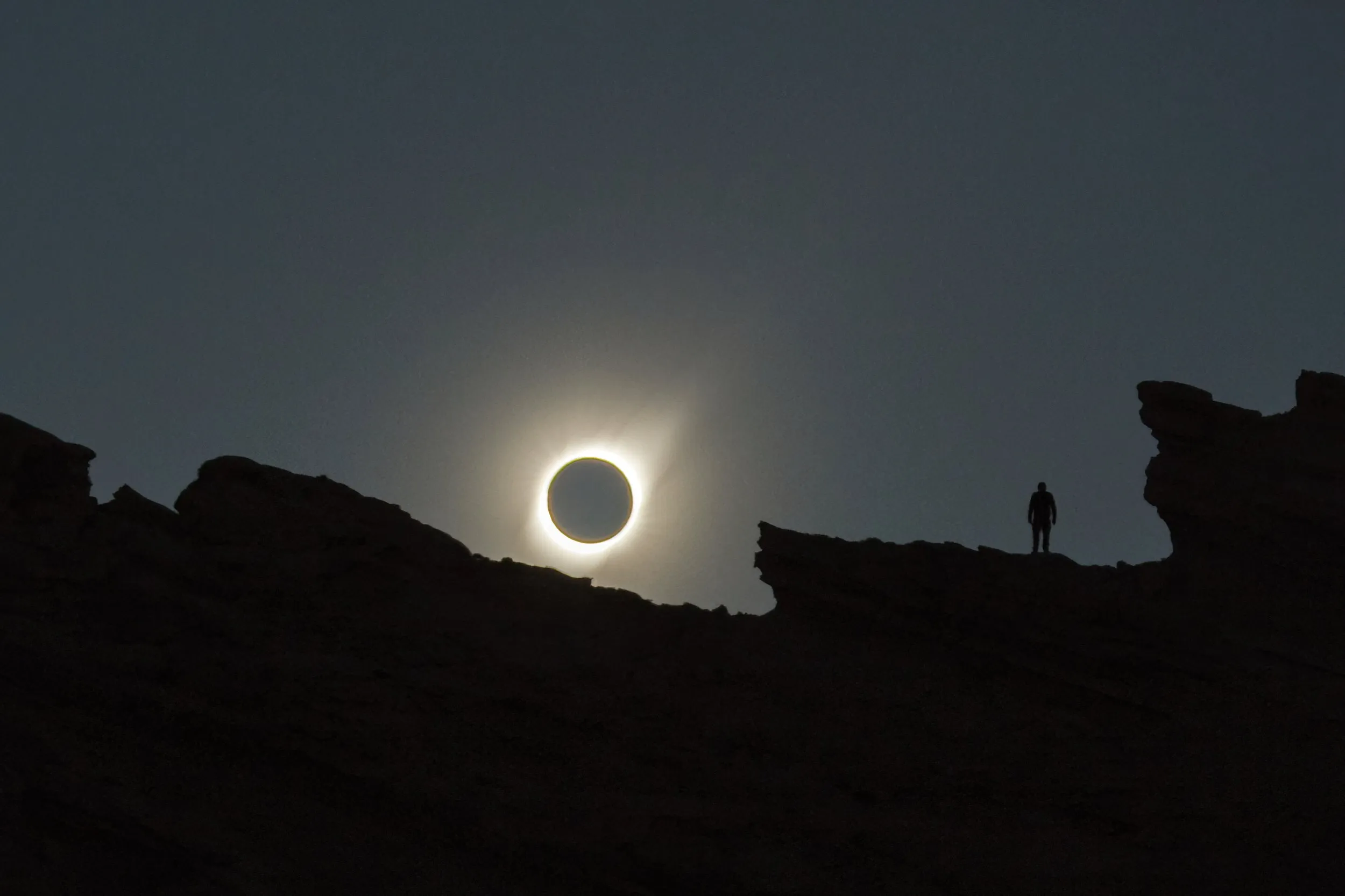
In 2019 the New York Times commissioned me to photograph the total solar eclipse in San Juan, Argentina, with only three days’ notice. Organizing the trip in so little time was madness. A mix of fear and excitement froze me. I remember a magazine happened to be open next to me with the weekly horoscopes, and under Virgo it said: “unexpected travel proposals are coming, this is a good time to leap into the unknown.” The clarity and speed of that signal from the universe helped me decide. Right away I remembered my friend Fefo Bouvier, the astrophotographer, was going, so I decided to join his plan.
We traveled 26 hours by bus from Montevideo to San Juan.
Once there, we met a Canadian couple who had already seen several total eclipses. This was going to be their eleventh. That’s how I learned there are people who travel the world chasing eclipses, always wearing clothes printed with suns or moons.
Until then I had worked mostly as an advertising photographer, with no experience shooting journalistic stories. My friend Fefo had been planning one particular photo he’d been imagining for months, and since I had no time for my own research, I decided to follow him.
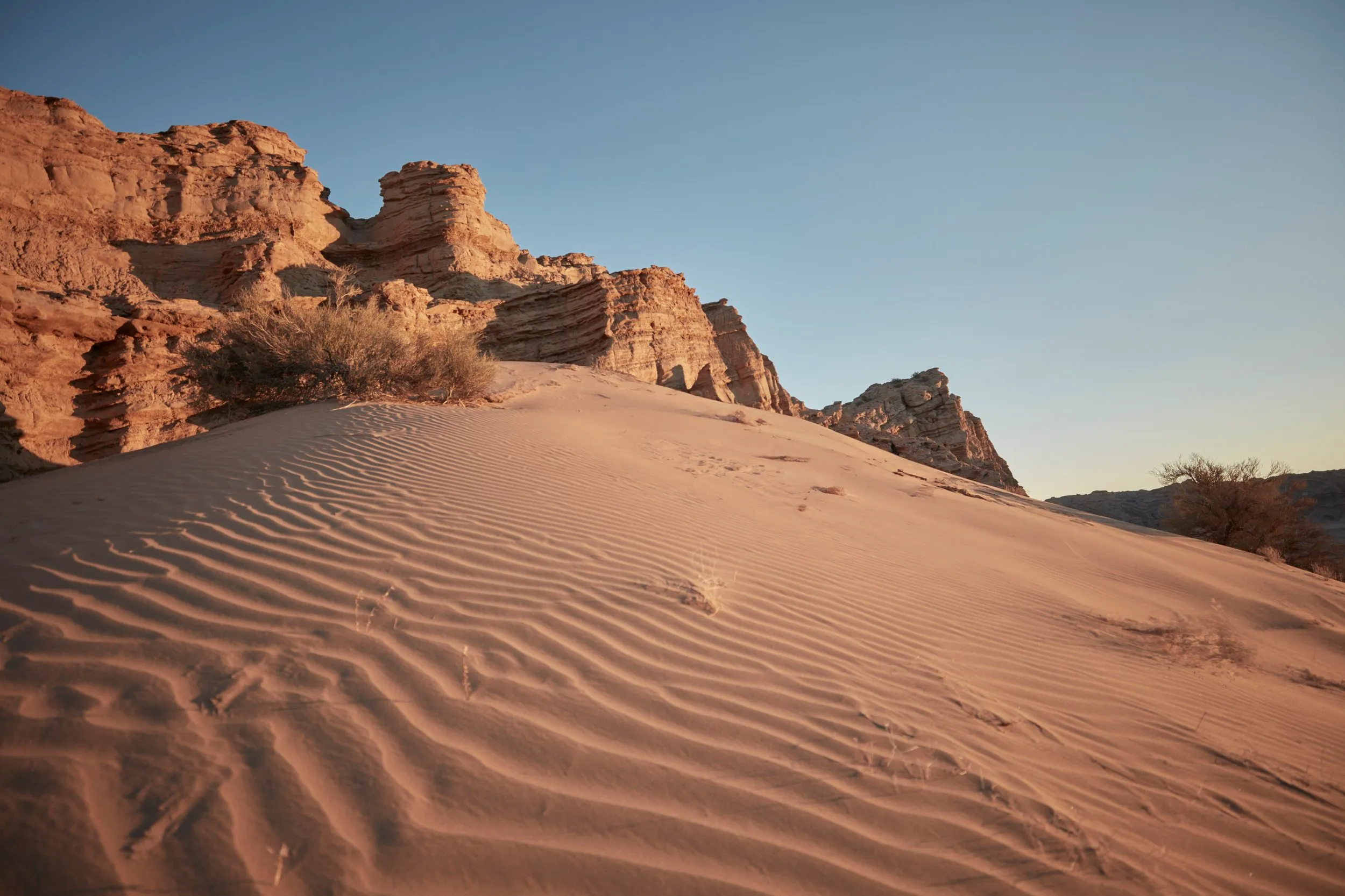
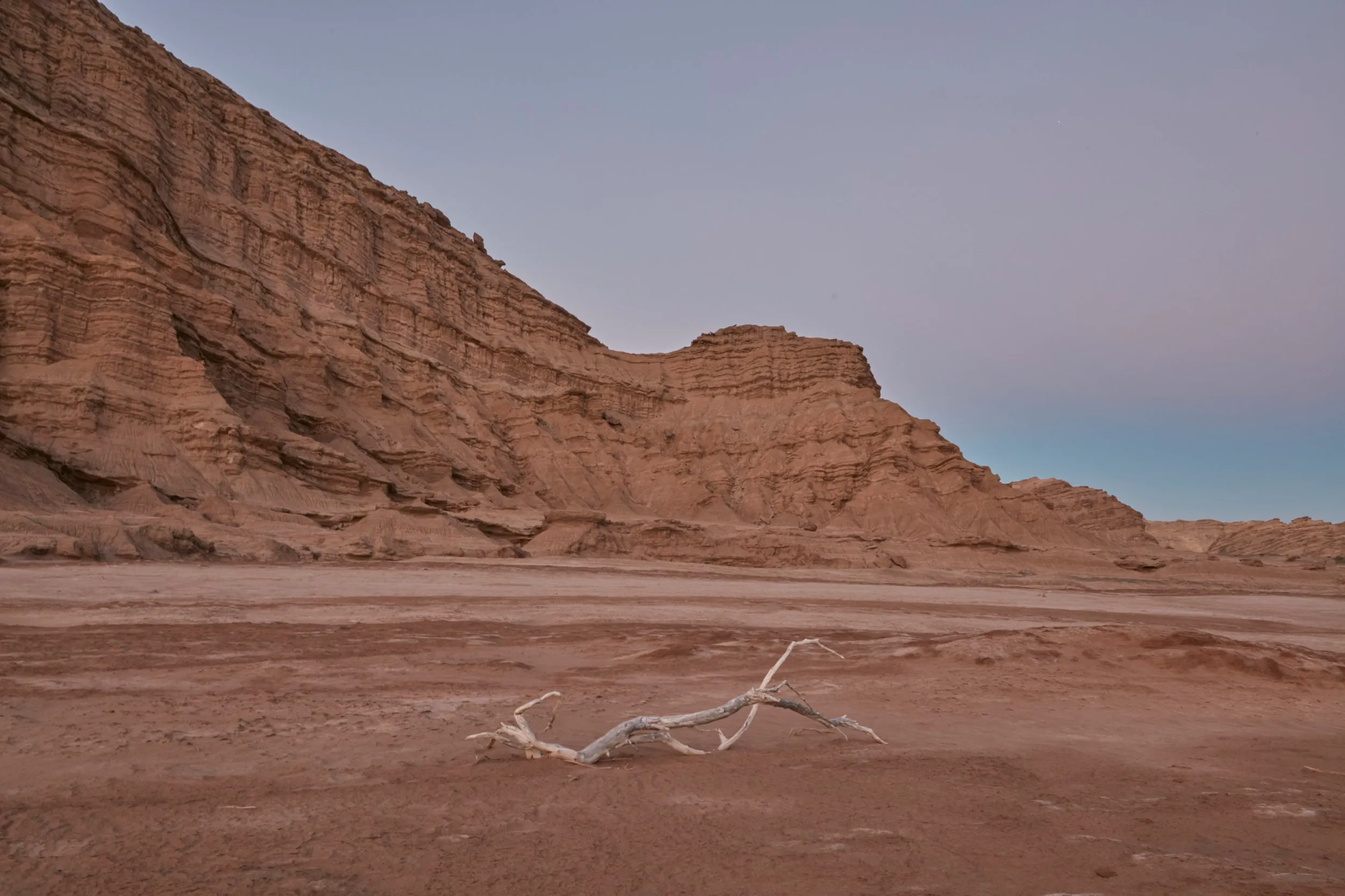
We picked the enchanted valley of Mogna, striking for its rock formations and incredible textures. According to Marcelo, our guide, the only way in was a one-hour walk over rough, difficult ground. We asked him directly if there wasn’t an easier way to get there, and he said, without hesitating, that this was the only route.
Because during an eclipse night falls in a matter of seconds and then you can’t see a thing, it’s hard to change camera settings or adjust the frame. These photos demand being in the right place at exactly the right moment.
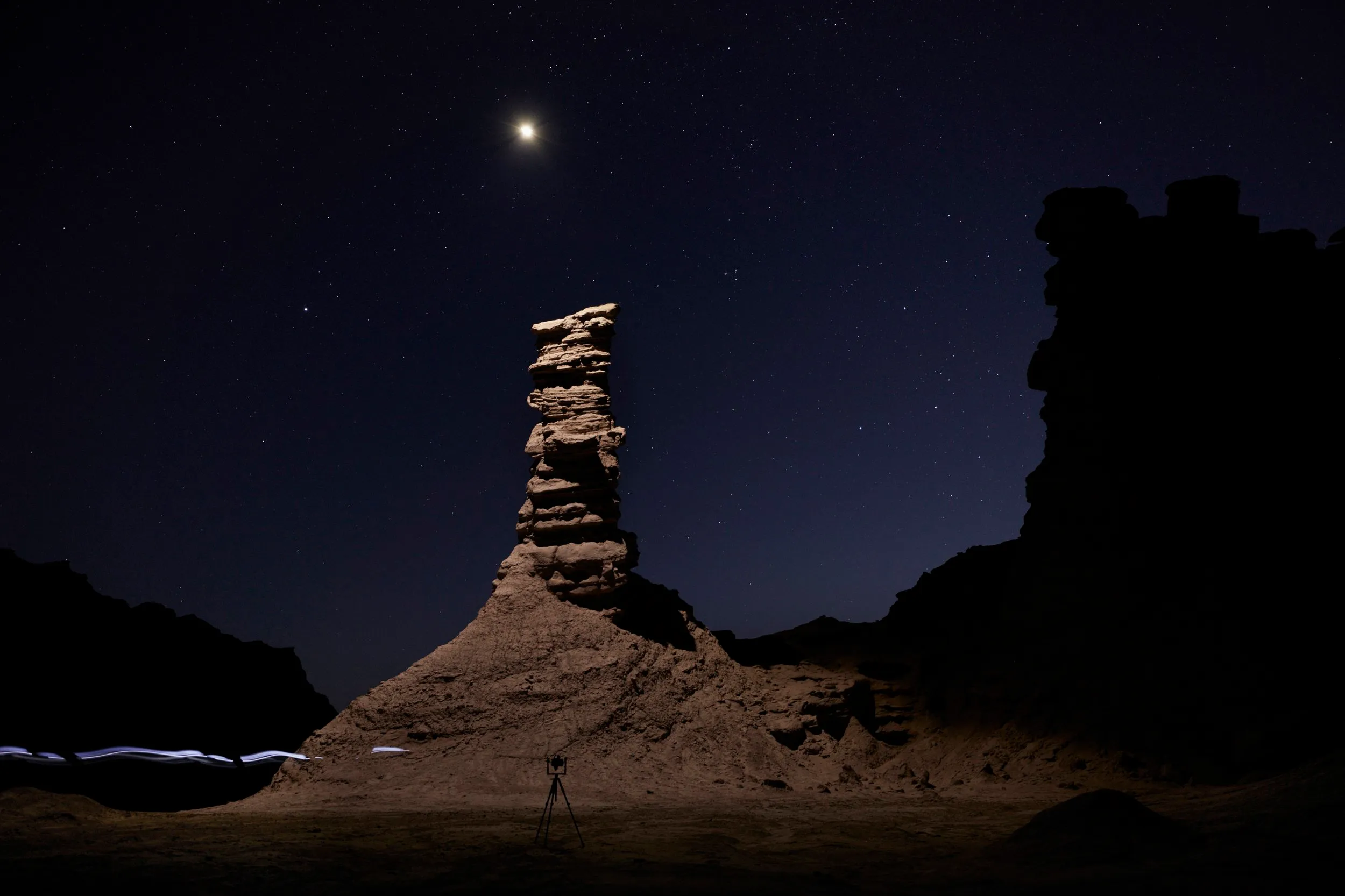
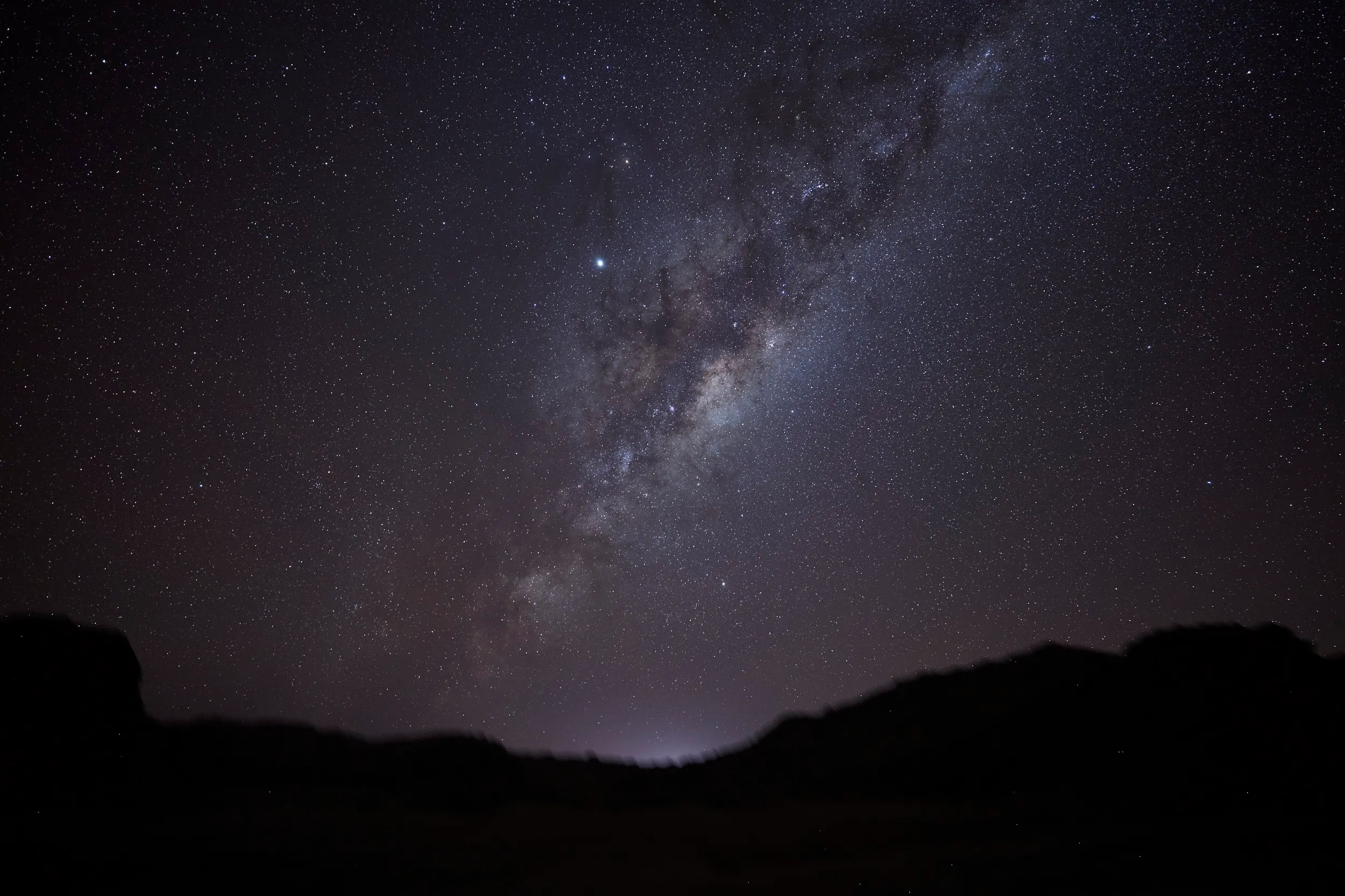
So we went to our chosen spot the day before. We stayed until nightfall to get to know the terrain, work out where to point the cameras, and see how it would look in the dark. We used the time to shoot some night photos with the Milky Way shining, and once it got too cold, we started the exhausting walk back. It took another hour to reach our beds.
The next day, at the trailhead, a group of scientists refused to let us through, saying they were taking important measurements. I started to doubt the cosmic wisdom of the horoscope. Had it lied to me? Had all that planning been for nothing? I didn’t want to give up, so I pulled out every tool I had, even talked about soccer, a subject that interests me not at all.
In the end, what opened the doors was telling them I worked for the New York Times.
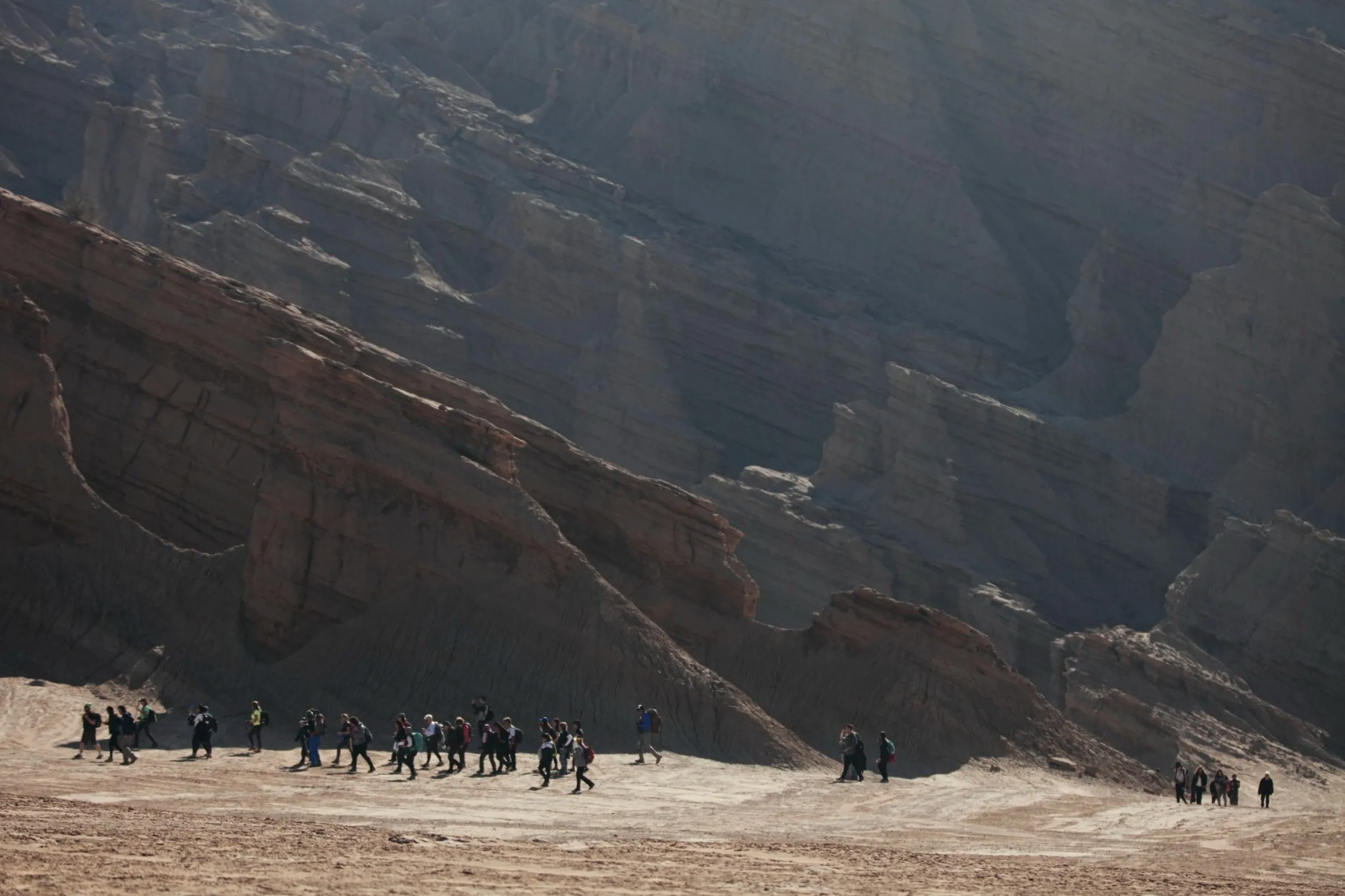
From there we went back the same way, and shortly after arriving we watched a group of dozens of tourists come up the trail, among them an older man walking with a cane. I had to breathe several times to keep from losing it at the proof that there was clearly an easier path. Luckily Marcelo was already walking toward the mountaintop, where he’d model for the photos.
Thirty minutes before totality, the light started to change and an absolute silence fell. Close to the moment, the air cooled fast, and a beautiful silver light appeared, close to a sunset but bluer. I saw colors I had never seen before. The wind rose in whirls of sand. My skin prickled, my heart beat faster, my body was shaking.
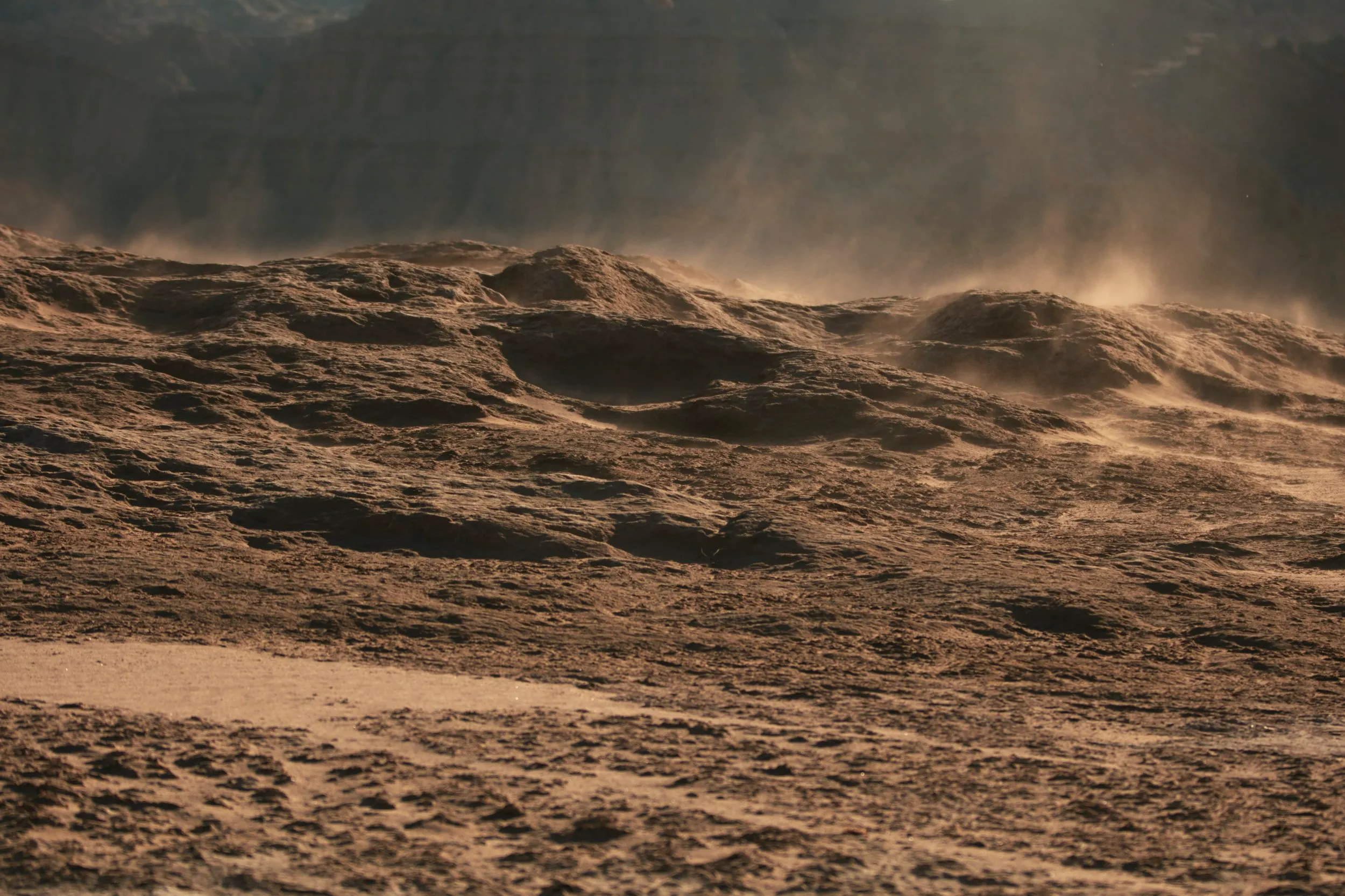
With so much feeling running through me, photographing got harder and harder. The darkness lasted two extraordinary minutes. I managed only three photos of Marcelo beside the sun.
I had just lived one of the most intense experiences of my life, and at the same time I hadn’t gotten the photo I was after.
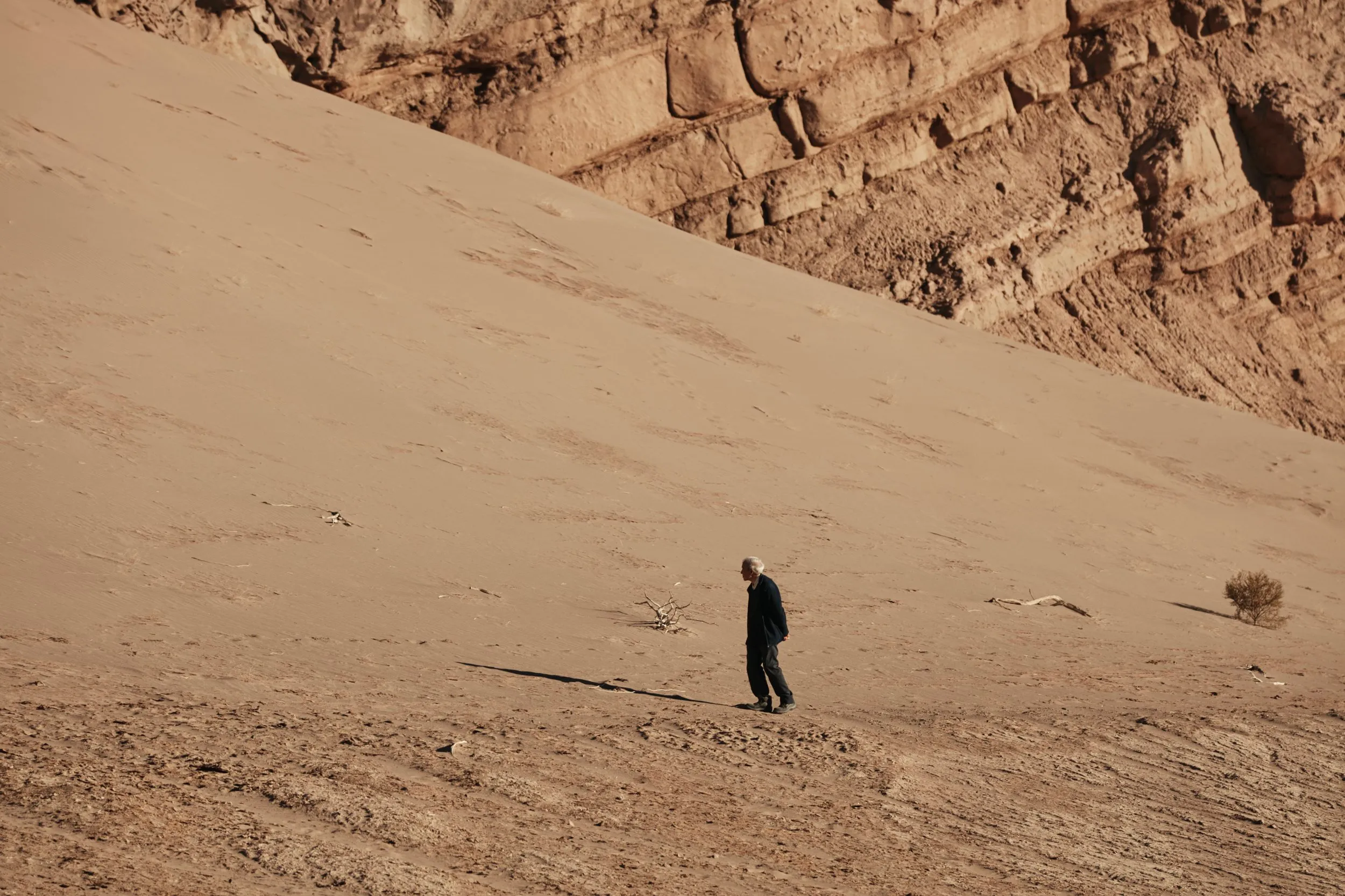
On the way back I kept wondering if any of the photos had come out sharp. When I could finally download the images, I confirmed there was good material. What I didn’t expect was that I couldn’t upload them before the deadline. The wifi had gone down in the little town where we were staying.
The real challenge, in the end, was holding both things at once: the joy of having witnessed something so moving, and the disappointment of not doing my job the way I’d hoped. My photos weren’t published in 2019, but I loved finding out that yesterday the New York Times posted one of them on its Instagram.
The images I made don’t come close to what I felt witnessing a total solar eclipse. But that experience helped me understand why eclipse chasers exist, and that I could easily become one.
If you enjoyed this story, you can subscribe to my newsletter here to receive more stories like this in your inbox.